Across the world, humanity faces a mounting crisis of land degradation, water scarcity, and dwindling arable acreage. As urbanization accelerates and climate change intensifies, once-productive landscapes are succumbing to desertification, erosion, and salinity. This alarming decline in fertile land threatens global food security and the availability of plant-based products vital to daily life — from the oils we cook with to the ingredients that sustain industries. The world urgently needs new agricultural models that can thrive where traditional systems fail.
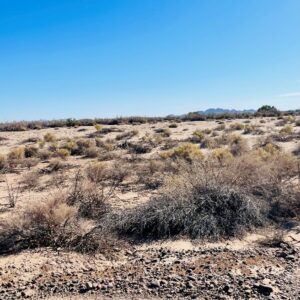
At Yahav Innovations, we believe that the future of farming lies in reimagining the impossible, in proving that even the harshest environments can be restored, revitalized, and reconnected to the global food supply chain. Our work at Mogador Farms in Yuma, Arizona, stands as living proof of that vision. What began as a stretch of abandoned, overgrown desert, littered with remnants of disused shrimp ponds and fractured concrete, is now being reborn as a vibrant, high-performance agricultural ecosystem at the heart of the Sonoran Desert.
Engineering a Desert Renaissance
Our journey began with the most fundamental question: how do you bring life back to a place that was written off as barren? The Yahav team approached the problem with the same combination of scientific precision and practical grit that defines our philosophy. We started with a comprehensive land and water assessment, deploying drones, running detailed soil and water analyses, and mapping natural water flow across thousands of acres.
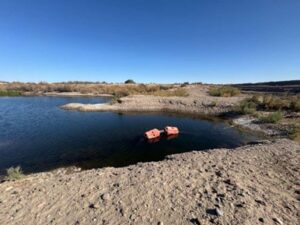
Armed with data, we designed a master plan for transformation: a network of canals and reservoirs to capture monsoon rainwater, an integrated grid of roads and field parcels, and innovative irrigation systems fed by both deep wells reaching 1,200 feet and shallow wells at 250 feet. This dual-water system allows us to mix low-salinity deep water with higher-EC shallow sources, balancing efficiency with sustainability. By incorporating desalination and rainwater harvesting, we ensure not only water sufficiency but resilience against future scarcity.
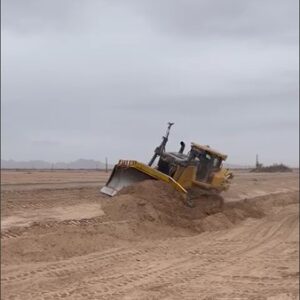
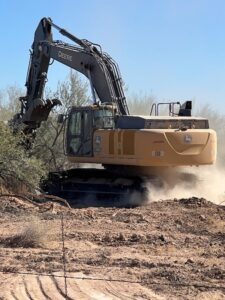
As the land was cleared, leveled, and strengthened, the transformation became tangible. Bulldozers carved through old pond walls, excavators opened drainage channels and newly built six-foot-high roads gave structure and protection to the emerging fields. What was once unrecognizable desert began to resemble a farm again, not a relic of the past, but a blueprint for the future.
Building Infrastructure, Building People
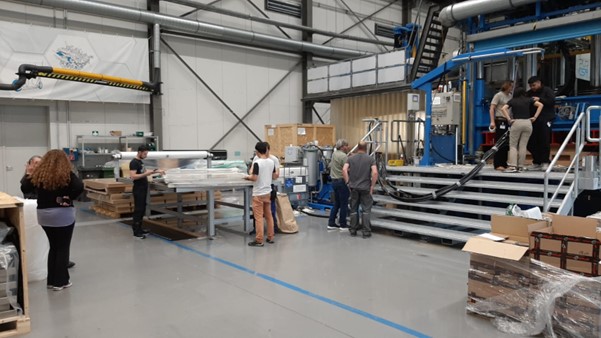
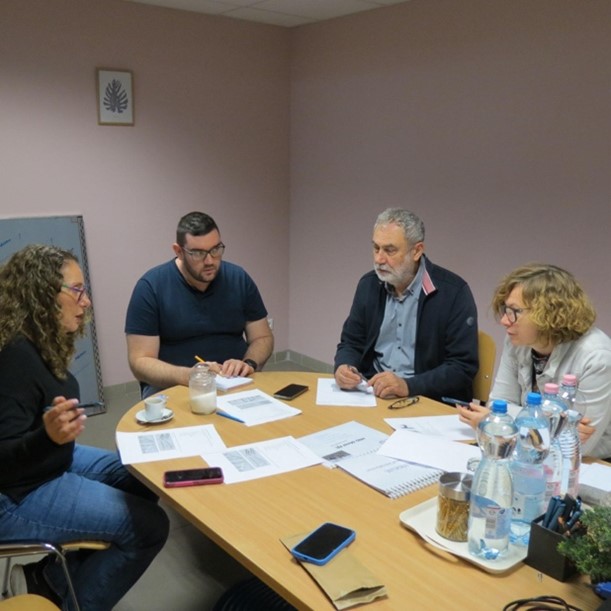
Desert farming is not just a feat of engineering; it’s a test of human perseverance and collaboration. In those early months, the crew faced grueling heat, dense overgrowth, and countless mechanical challenges. Yet something remarkable happened, the project forged not only a farm but a community.
Under the guidance of Jesse, the operations manager, team members from diverse backgrounds came together with shared purpose. Many were new to heavy equipment operation, learning through one-on-one mentorship in the field. “I’ve never in my life had someone sit in the cab with me and me teach them how to operate one-on-one,” Jesse recalls. Those who started as rookies became skilled operators, working side by side like family. There were long days, tough weeks, and unforgettable moments, including team lunches where Miriam’s kabobs became legendary. Every trench dug, every tree planted, felt like a small victory in reclaiming the land.
Sustainability Through Innovation
Water remains the lifeblood of this project, but energy innovation powers its future. Yuma is the sunniest place on Earth, and Yahav Innovations is harnessing that advantage. Plans for a solar field will soon provide clean, renewable energy to power pumps, processing facilities, and eventually the entire farm. Combined with the region’s high-voltage grid connection, the farm’s energy system will balance autonomy with security, a model for sustainable rural electrification.
Yahav’s design philosophy is to build ecosystems, not just farms. Each phase of the project is engineered for long-term resilience, from soil regeneration and efficient water reuse to integrated habitat protection for desert wildlife. The project demonstrates that productive agriculture and environmental stewardship can coexist and even reinforce one another.

A Vision Beyond Yuma
What Yahav Innovations and Mogador Farms are achieving in the Sonoran Desert is more than a local success story, it’s a global model for land restoration and climate adaptation. The methods being pioneered here can be replicated across the world’s arid regions, turning abandoned terrain into sustainable, food-producing assets.
Each mile of road, each well drilled, and each field planted represents more than progress, it represents hope. As Jesse said, looking across the growing fields one evening:
“Every day I come here, it’s like I can’t believe we did it.”
At Yahav Innovations, we know this is just the beginning.
We are not merely farming in the desert, we are redefining what’s possible.